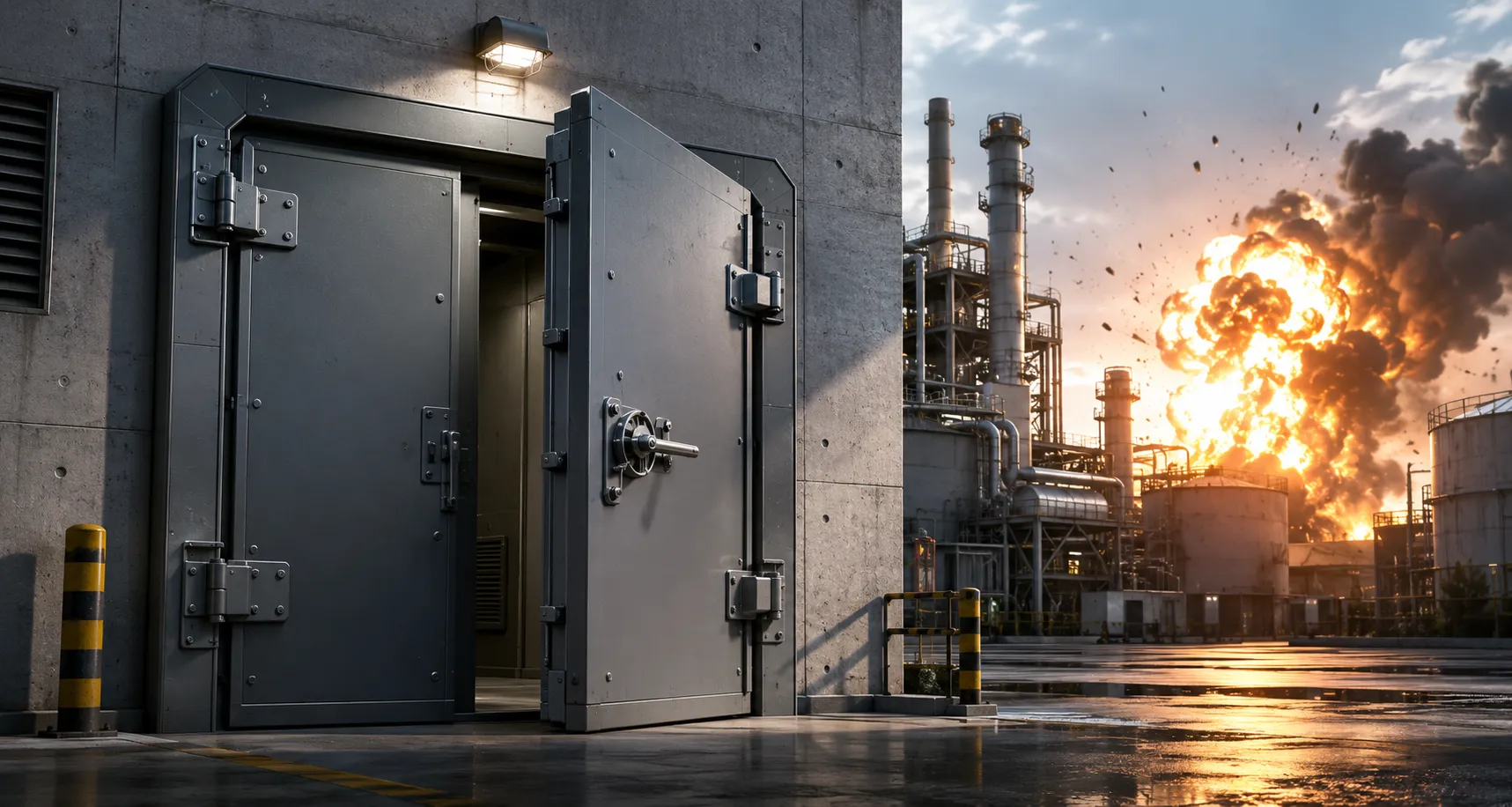
In modern industrial and infrastructure environments, safety and secure access systems play a vital role. Facilities handling sensitive operations, heavy machinery, hazardous materials, or critical infrastructure require durable protective solutions to improve workplace safety and operational efficiency. One of the most reliable solutions used across multiple industries is the blast resistant door.
Blast doors are specially engineered heavy-duty doors designed to handle high pressure, sudden impact, heat, and debris. Unlike conventional industrial doors, blast doors are manufactured using reinforced steel structures, strong locking systems, heavy-duty hinges, and airtight sealing technology. Their primary purpose is to enhance safety, protect equipment, and maintain the integrity of secured facilities.
What is a Blast Door?
A blast door is a reinforced industrial door designed for high-security and industrial applications where additional structural strength and pressure resistance are required. These doors are commonly installed in industrial plants, underground facilities, laboratories, power stations, control rooms, and critical infrastructure locations.
Modern blast doors are manufactured according to specific pressure ratings measured in PSI (pounds per square inch). Depending on operational requirements, blast doors may also include fire-resistant properties, gas-tight sealing, acoustic insulation, and corrosion resistance. These additional features make blast resistant doors suitable for demanding environments where durability and reliability are essential.
Blast doors are available in multiple sizes and configurations, ranging from personnel access doors to large vehicle entry systems. Their design depends on the level of protection required and the type of facility where they will be installed.
How Blast Doors Work
Blast doors are engineered to absorb and distribute pressure efficiently while maintaining structural stability. Their reinforced construction helps reduce the impact of sudden pressure changes and external force loads that may damage conventional doors or entry systems.
The overall strength of a blast door comes from the combination of its reinforced steel body, strong frame structure, internal stiffeners, and advanced locking systems. These components work together to maintain door integrity under challenging operating conditions.
Key Components of Blast Doors
- Reinforced steel construction
- Heavy-duty hinges and locking systems
- Multi-point latching mechanisms
- Pressure-resistant door frames
- Fire and smoke seals
- Gas-tight gaskets
- Internal reinforcement panels
These features help improve durability, safety, and long-term operational performance while reducing maintenance requirements.
Main Applications of Blast Doors
Industrial and Manufacturing Facilities
Industrial environments such as refineries, petrochemical plants, processing facilities, laboratories, and power stations often require high-performance protective door systems for improved safety and operational control.
Industries commonly using blast resistant doors include:
- Oil and gas facilities
- Chemical processing plants
- Pharmaceutical facilities
- Power generation stations
- Material storage areas
- Mining operations
In these industries, blast doors help improve workplace safety, equipment protection, and operational reliability. Their reinforced structure helps isolate sensitive areas while supporting controlled access throughout the facility.
Defense and High-Security Facilities
Blast doors are widely used in defense infrastructure, secure facilities, underground shelters, command centers, and other high-security environments where reinforced access systems are necessary.
Many high-security blast doors are designed with additional features such as ballistic resistance, fire protection, acoustic insulation, and airtight sealing systems for enhanced operational performance. These doors are commonly installed in facilities requiring advanced physical protection and controlled access management.
Underground and Infrastructure Projects
Blast resistant doors are also used in underground tunnels, utility stations, transportation infrastructure, and emergency shelters. Their durable construction and pressure-resistant design make them suitable for challenging environments where safety and reliability are critical.
Infrastructure facilities often require customized blast doors designed to meet specific structural and operational requirements. Manufacturers can provide tailored solutions based on project demands and installation conditions.
Dust Collection Systems in Woodworking
In woodworking and industrial dust collection systems, the term “blast gate” is also commonly used. However, these systems are different from industrial blast resistant doors.
Dust collection blast gates are sliding mechanical barriers installed in duct systems to regulate airflow between machinery. These systems help improve airflow control and dust extraction efficiency in woodworking operations. While the terminology may sound similar, blast gates serve a completely different operational purpose.
Types of Blast Doors
Blast doors are available in different configurations depending on facility requirements and operational needs. Common types include:
- Hinged blast doors
- Sliding blast doors
- Hydraulic blast doors
- Gas-tight blast doors
- Fire-rated blast doors
- Acoustic blast doors
- Personnel access blast doors
- Vehicle access blast doors
Each system can be customized according to operational, structural, and environmental requirements. Factors such as door size, pressure rating, opening mechanism, and sealing performance influence the final design.
Benefits of Blast Resistant Doors
Installing blast resistant doors offers several important benefits for industrial and infrastructure facilities:
- Improved personnel safety
- Enhanced structural protection
- Resistance to pressure impact
- Fire and smoke containment
- Better operational continuity
- Long service life in demanding environments
- Increased protection for critical infrastructure
- Reduced maintenance requirements
- Reliable performance under challenging conditions
These advantages make blast resistant doors an important solution for industrial and secure facilities where durability and operational reliability are essential.
Choosing the Right Blast Door
Selecting the right blast door depends on several important factors, including:
- Required pressure rating
- Facility application
- Fire resistance requirements
- Airtight sealing requirements
- Door dimensions and operational frequency
- Environmental conditions
- Industry standards and certifications
Working with experienced manufacturers helps ensure the blast door system is properly designed for the intended application. Proper engineering, material selection, and installation are important for achieving reliable long-term performance.
Conclusion
Blast doors are an essential part of modern industrial and infrastructure safety systems. Built with reinforced materials and advanced engineering, these heavy-duty doors provide durability, operational reliability, and enhanced protection in demanding environments.
As industries continue focusing on safety, infrastructure protection, and operational efficiency, the demand for high-quality blast resistant doors continues to grow across sectors such as manufacturing, energy, processing plants, defense infrastructure, transportation, and critical facilities. With customizable designs and advanced protective features, blast doors remain a reliable solution for secure and high-performance industrial applications.